
The Data Edge: Why Better Property Intelligence Matters at 1/1 Reinsurance Renewals
By Robert Silva, Risk Analytics Expert & Lead Actuary, ZestyAI

As January 1 reinsurance renewals approach, a softening property catastrophe market is creating a familiar challenge for insurers and reinsurers: how to remain competitive without compromising underwriting discipline.
In a softer market, pressure to reduce rates and write more business can make it difficult to maintain technical pricing standards. But the carriers and reinsurers best positioned to navigate these conditions may have an advantage that goes beyond pricing: a more complete understanding of the properties behind their portfolios.
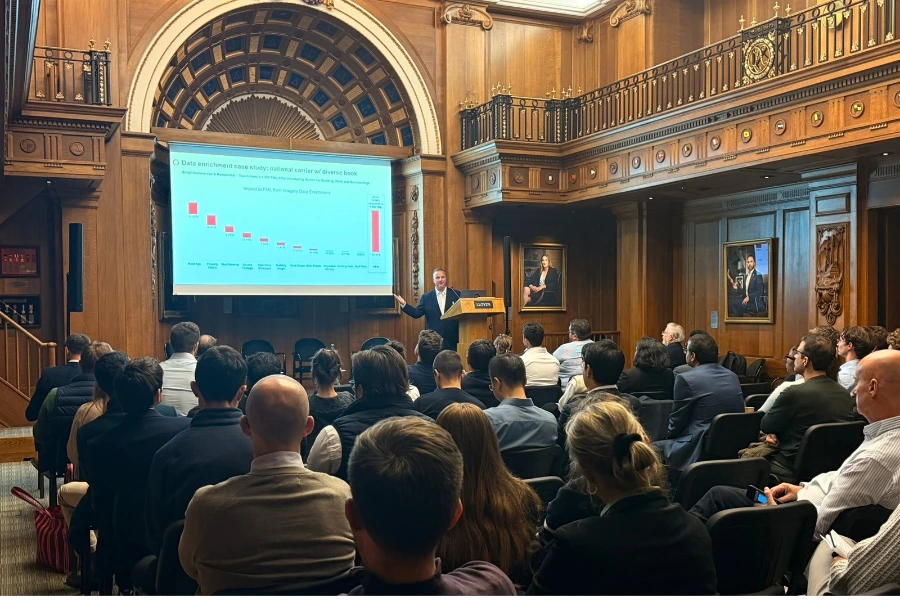
That was the central question explored at InsTech's recent Lunch & Learn at Lloyd's of London: Can better portfolio data change the deal at 1/1?
The answer begins with a fundamental distinction between knowing where risk is concentrated and understanding the risk itself.
Two Portfolios, Two Very Different Risk Profiles
Consider two property portfolios with the same total insured value, geographic distribution, and construction mix.
On paper, they may appear nearly identical. Traditional catastrophe models might produce similar outputs for both, particularly when important property characteristics are unknown and replaced with average assumptions.
Look at the individual properties, though, and the two can be very different. One portfolio may contain homes with recently replaced roofs, well-maintained structures, and cleared defensible space. The other may have older, deteriorating roofs and vegetation conditions that increase vulnerability to wildfire.
ZestyAI's wildfire research shows how much those difference matter; homes exposed to the same fire, even within the same neighborhood, can experience destruction rates that differ by a factor of two based on property-level characteristics.
Two portfolios that appear equivalent at an aggregate level may represent materially different risk, and catastrophe models can only account for those differences when the underlying exposure data captures them.
The Problem With Traditional Exposure Data
Much of the property information insurers rely on originates with policyholders, inspections, or records collected when a policy is first written, and each source has limitations.
Policyholders may not know the precise age of their roofs. Inspections can be costly and inconsistent. Property characteristics that are difficult to observe from the ground may go unverified. And even when the information is accurate at binding, it can become outdated as properties change.
Roofs deteriorate. Vegetation grows. Renovations alter structures. A property that was accurately characterized three years ago may have a meaningfully different risk profile today.
Advances in aerial imagery, computer vision, and other property intelligence technologies offer a way to address these gaps.
Imagery provides visibility into characteristics that may otherwise be difficult to inspect. Computer vision helps apply consistent assessments across large numbers of properties. Building permits and historical imagery help establish when roofs were replaced or structures modified.
Just as importantly, regularly refreshed information allows insurers to identify what has changed since the last renewal.
The objective is to make the information feeding catastrophe models more complete, current, and representative of actual risk.
Risk Clarity Creates Competitive Differentiation
Better exposure data has value in any market environment, and its importance becomes particularly clear when pricing competition intensifies.
For insurers, the ability to demonstrate disciplined underwriting with verified property-level evidence can strengthen conversations with reinsurers.
Rather than presenting a portfolio primarily through aggregate geographic exposure, carriers can provide a more granular view of the characteristics that influence vulnerability and loss potential.
For reinsurers, that same intelligence can support more informed differentiation between cedants, helping identify portfolios whose underlying risk characteristics may be better or worse than aggregate metrics suggest.
Better data does not automatically produce lower reinsurance premiums. It gives both sides a stronger foundation for evaluating risk, negotiating terms, and making decisions about where to deploy capacity.
In a competitive market, the ability to recognize differences that others cannot see can become a meaningful advantage.
Why Now Is the Time to Act
A softening market is also the right time to act. Carriers that show reinsurers how they are improving data quality and sharpening their view of risk are building a story that sets them apart from other carriers. That story takes time to build and to prove, and starting now provides that time.
The work pays dividends now, and it will again when the market hardens. Carriers that have already demonstrated the quality of their portfolios will be well positioned when capacity tightens.
To learn how ZestyAI helps carriers and reinsurers prepare for renewal, visit our reinsurance solutions page.
The Questions Insurers and Reinsurers Should Be Asking
As January 1 renewals approach, the most important questions may not be about rates alone.
For insurers:
Are we giving reinsurers enough evidence to understand the quality of our portfolio, or are we primarily showing them where our properties are located?
For reinsurers:
Do we understand the properties behind our cedants' portfolios better than our competitors do?
These questions get to the heart of underwriting discipline. When important property characteristics remain unknown, insurers and reinsurers may end up treating materially different risks as though they were equivalent.
When those differences become visible, both sides gain a stronger foundation for decisions about pricing, capacity, and portfolio strategy.
The opportunity is to move beyond broad assumptions and build a more defensible understanding of the properties behind the numbers. At renewal, that clarity creates competitive advantage because it supports a sharper view of risk and better-informed decisions.